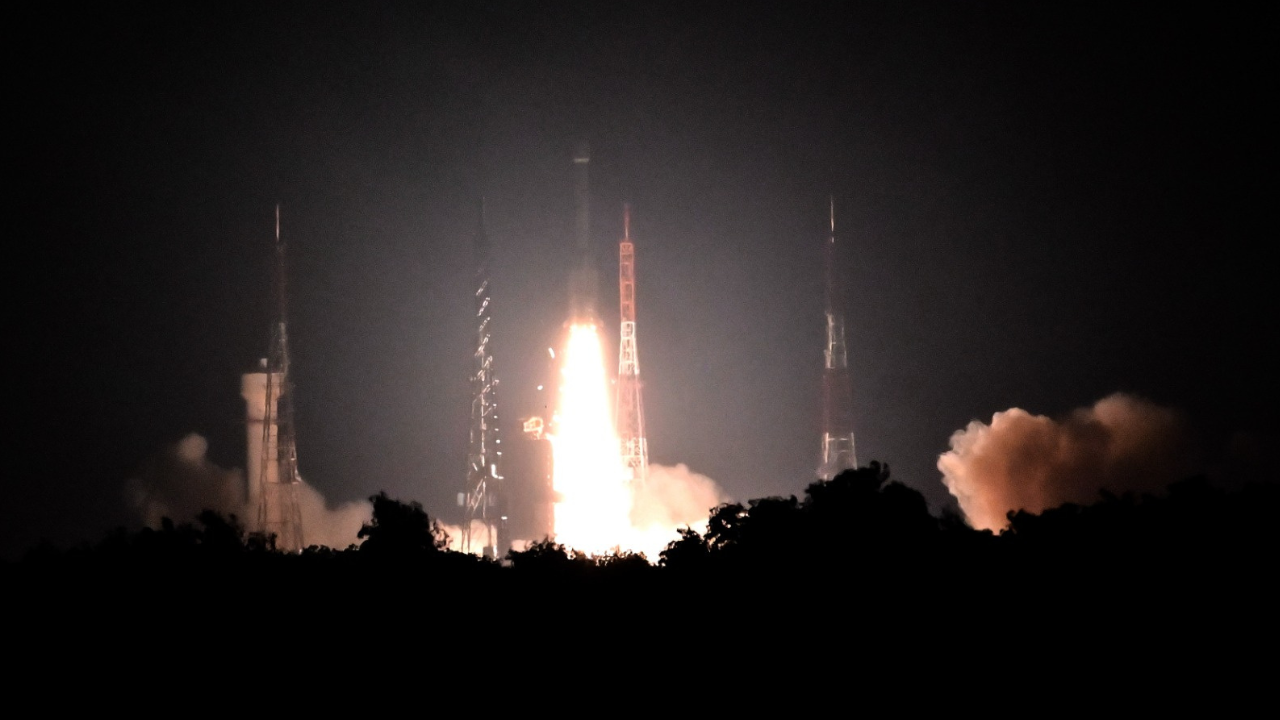
The Indian Space Research Organisation achieved a major milestone on September 3, 2026, with the successful launch of its latest spacecraft mission. The GSLV-F17 rocket lifted off smoothly, carrying the advanced EOS-05 Earth observation satellite into its designated geosynchronous orbit. Space agency officials confirmed that the flight sequence progressed as planned, culminating in the precise deployment of the satellite in space.
The newly deployed EOS-05 spacecraft is designed to enhance India's capabilities in remote sensing and environmental monitoring. Satellites in geosynchronous orbits match the rotation rate of the Earth, allowing them to maintain a constant relative position and provide continuous observation over targeted regions. This capability is expected to significantly bolster the country's resource management, weather forecasting, and disaster response operations.
This successful deployment marks another reliable performance for the Geosynchronous Satellite Launch Vehicle program. Engineers and scientists at the space agency spent months preparing the launch vehicle and its payload at the primary spaceport. The flawless execution of the mission highlights the nation's growing expertise in indigenous heavy-lift launch technology and complex orbital maneuvers.
Data from the newly positioned satellite will soon become available to various government departments and research institutions. These agencies utilize high-resolution imaging and atmospheric data for agricultural planning, urban development, and maritime security. Regular monitoring from orbit plays a vital role in tracking environmental changes and supporting sustainable development initiatives across the subcontinent.
The successful flight reinforces the position of the national space agency as a key player in the global aerospace sector. Officials anticipate that the spacecraft will operate for many years, delivering vital information and reinforcing the country's technological infrastructure in space.
Reporting based on coverage first published by The Times of India. Read the original report at The Times of India.