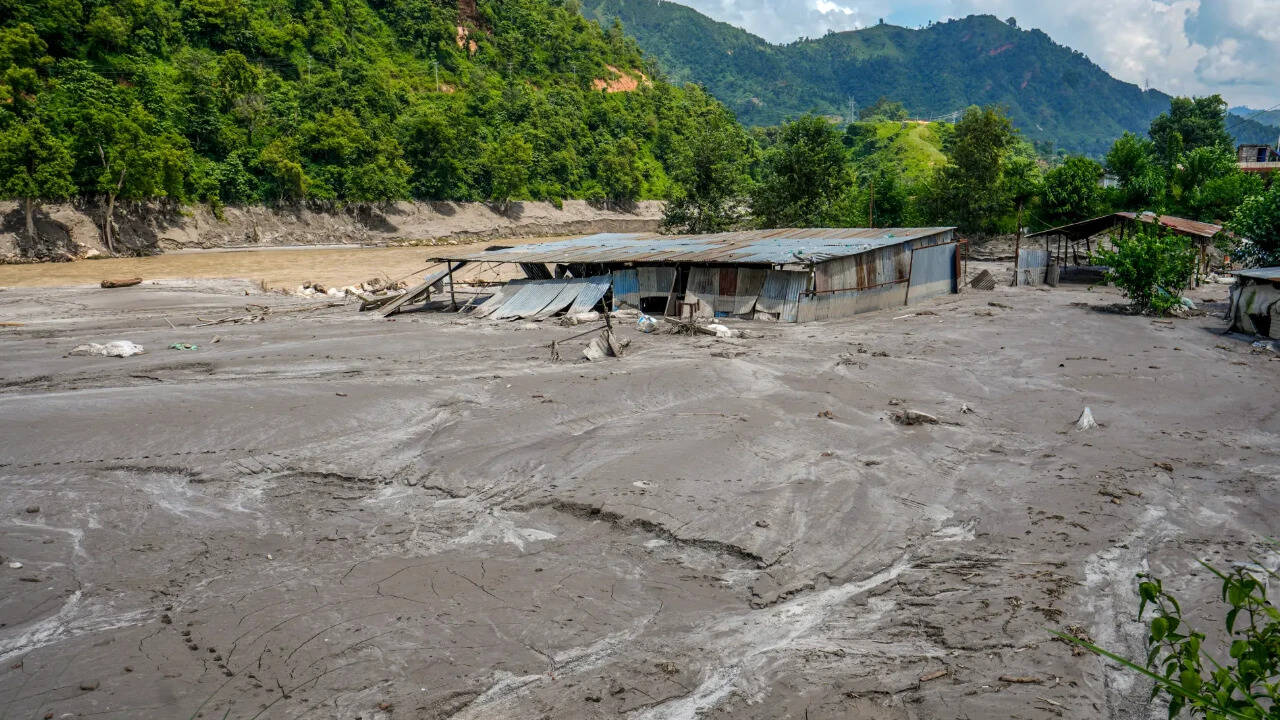
Catastrophic flooding across parts of Nepal and Tibet has drawn renewed attention to scientific alerts issued earlier by regional environmental researchers. The recent disaster, triggered by a massive glacier collapse that resulted in hundreds of fatalities and numerous missing persons, follows explicit warnings regarding accelerating ice melt in the Himalayas.
Months prior to the disaster, the International Centre for Integrated Mountain Development published findings indicating that glacial ice loss across the region had doubled. Experts warned that smaller glaciers were disappearing at an unprecedented rate, significantly elevating the threat of glacial lake outburst floods. These swollen bodies of water frequently breach their natural earthen dams, sending torrents of water and debris downstream into populated mountain valleys with little warning.
Mountainous communities downstream remain particularly vulnerable to these sudden environmental crises. Because glacial hazards often originate in remote, high-altitude terrain, local populations have narrow windows to evacuate when disasters strike. The recent catastrophe underscores the immediate dangers posed by climate shifts in the Hindu Kush Himalaya region, where rising temperatures continue to destabilize fragile cryosphere formations.
Environmental specialists emphasize that addressing these transboundary risks requires coordinated efforts between nations sharing the Himalayan river basins. Weather patterns, glacial lake expansions, and hydrological shifts do not respect international borders, making joint monitoring systems essential for early detection. Without collaborative data sharing and regional preparedness initiatives, communities downstream will face escalating risks from future outburst events.
Authorities and disaster response teams continue search and recovery efforts in the affected valleys of Nepal and Tibet following the devastating flash floods. The tragedy has intensified calls for long-term adaptation strategies tailored to high-mountain environments. Observers stress that future risk mitigation must incorporate enhanced satellite tracking of unstable glaciers and improved community-level warning systems to protect vulnerable populations throughout the region.
Reporting based on coverage first published by The Times of India. Read the original report at The Times of India.