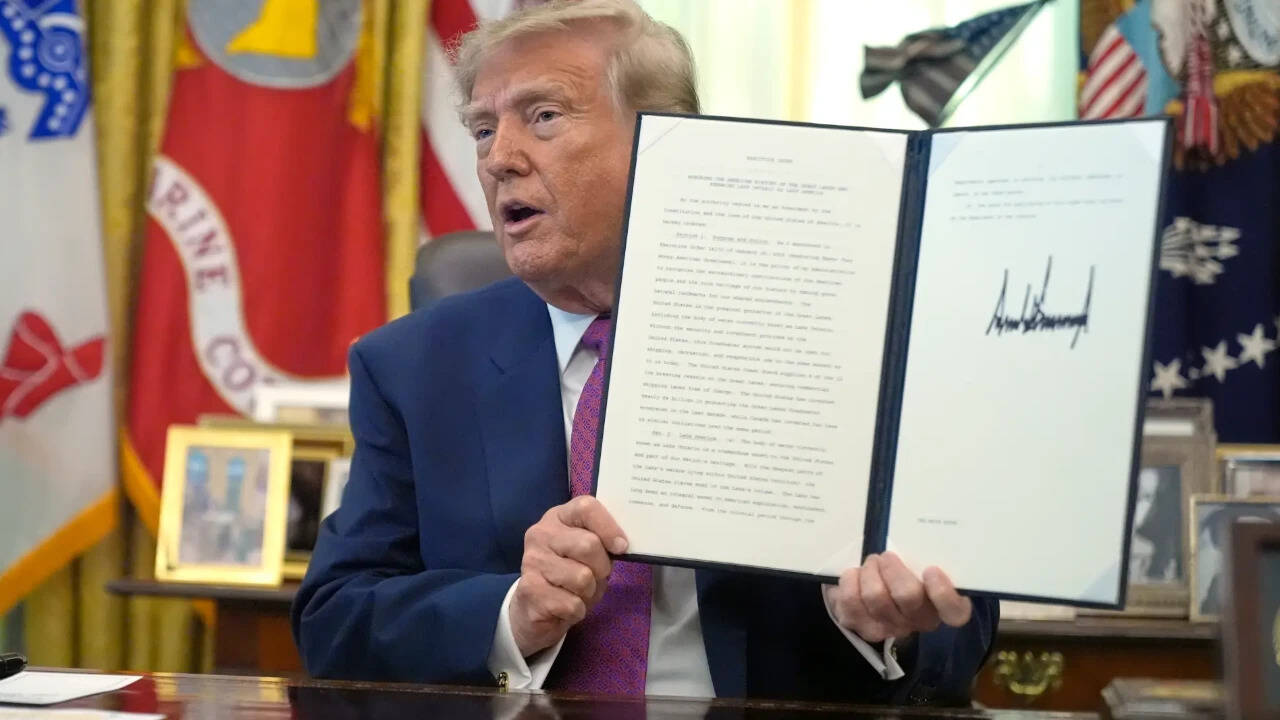
Washington has officially altered how American federal agencies designate Lake Ontario, renaming the transboundary body of water as Lake America. The executive order, signed by President Donald Trump on Thursday, instructs United States geographic authorities to update their official maps and databases accordingly.
The directive immediately applies to all federal documentation, charts, and administrative records maintained by the United States government. However, the geographic alteration carries no legal weight beyond American borders. Ottawa maintains sovereign authority over the northern portion of the shared waterway and its own domestic mapping standards.
This latest administrative step mirrors a similar policy enacted earlier regarding the Gulf of Mexico. In that instance, the executive branch mandated that United States agencies refer to the southern body of water as the Gulf of America. Neither neighboring nations nor international maritime bodies have adopted those unilateral designations.
Geographic renaming by executive decree has occasionally been utilized by various administrations to project domestic political priorities. Federal agencies in the United States must comply with directives issued by the Board on Geographic Names, which standardizes nomenclature for public use. International bodies, conversely, rely on long-standing treaties and bilateral agreements to determine official transboundary terminology.
Bilateral relations between Washington and Ottawa have experienced intermittent friction over trade, border security, and resource management. Unilateral changes to shared landmarks often complicate diplomatic cooperation between the two North American allies. Canadian officials have not yet announced any retaliatory administrative measures in response to the latest mapping directive.
Public reaction across the border has been largely skeptical, with environmental groups and local municipalities emphasizing the cooperative nature of managing the Great Lakes basin. The ecosystem relies on joint monitoring and pollution control agreements established decades ago. Despite the new American federal label, commercial shipping lanes and international fishing regulations remain governed by existing bilateral accords.
Reporting based on coverage first published by The Times of India. Read the original report at The Times of India.