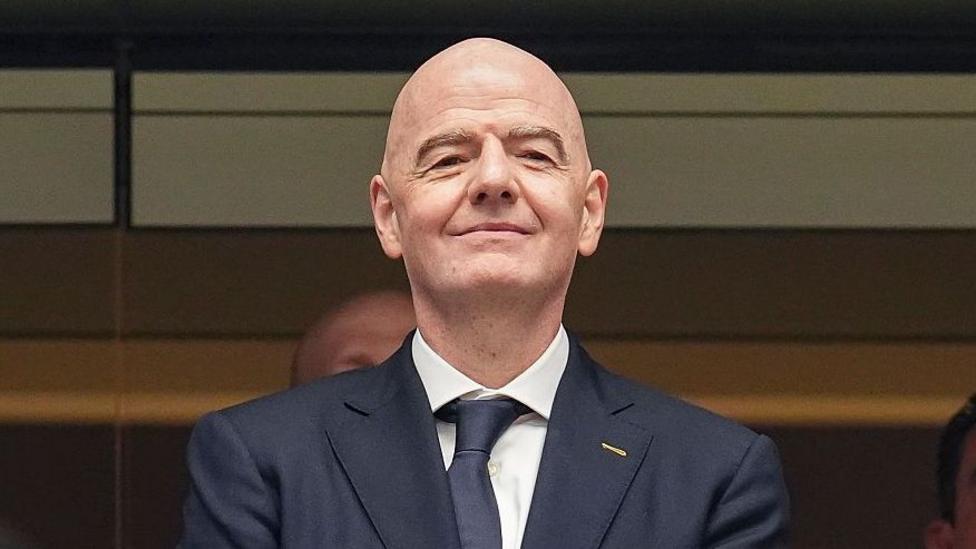
European football governing body UEFA has decided to call off its planned boycott of global football tournaments, yet leadership ambitions to unseat current FIFA President Gianni Infantino remain firmly in place.
The decision regarding the boycott will be formalized during a gathering of UEFA’s executive committee in Monaco. As part of this diplomatic shift, European officials and members representing the continent on the FIFA Council will review formal documentation confirming that the controversial FIFA Forward Enterprise project has been permanently shelved.
Rescinding the boycott clears the path for the upcoming FIFA Under-20 Women's World Cup, which is scheduled to kick off next week in Poland. Six European nations, including the host country, England, France, Italy, Portugal, and Spain, are now cleared to participate without disruption.
Although UEFA has stepped back from boycotting matches and abandoned a potential vote of no confidence—which would have required an unachievable threshold of three-quarters of global member associations—the organization is actively preparing a leadership challenge. Analysts note that removing the incumbent through a no-confidence motion was deemed too difficult, prompting a shift toward backing a unified challenger ahead of the March ballot.
Securing the presidency will require winning over a simple majority of 106 votes out of the 211 total member associations. While no official contender has been formally named yet, regional leadership figures such as CONCACAF President Victor Montagliani are viewed as viable options. Candidates must officially submit their nominations by November 18.
Observers suggest that even if the incumbent manages to survive the upcoming election, a closely contested race could severely undermine his authority and fracture his remaining political support within the global game.
The initial dispute stemmed from a collective pushback by Europe's 55 national associations last month, who protested governance changes and private ownership risks associated with the discarded FFE proposal. Following the resolution, a FIFA spokesperson expressed satisfaction that all qualified participants would be able to compete in Poland, emphasizing that the organization remains dedicated to fostering sport development through open communication with all confederations.
Meanwhile, prominent figures within the football community have publicly weighed in on the leadership debate. A coalition of former players recently utilized social media to voice their desire for a leadership overhaul at the top of the organization, with notable athletes echoing the sentiment that current administrative approaches are no longer working.
In contrast, a separate roster of former international stars designated as official governing body legends issued public messages backing the current administration. These supporters credited the leadership with improving player representation and driving global development across the sport over the past ten years.
Reporting based on coverage first published by BBC Sport. Read the original report at BBC Sport.


