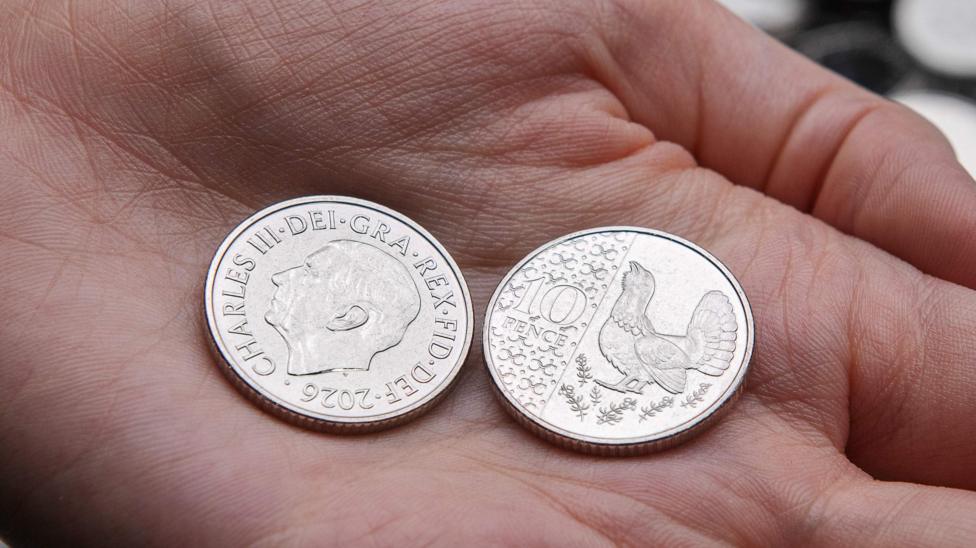
Shoppers across the United Kingdom may soon find a rare piece of currency in their change as a newly designed ten-pence coin enters general circulation. The fresh release marks the first time in approximately four years that new 10p pieces have been minted to meet economic demand, featuring the official portrait of King Charles III on the obverse.
The reverse side of the coin highlights the capercaillie, recognized as the largest species of grouse in the world. This particular bird is native to a limited region in Scotland and currently faces a severe threat of extinction, placing it on the conservation red list.
Officials at the Royal Mint noted that the striking contrast between the coin's distribution and the animal's population is intentional. Because roughly seven million of the new coins are entering the economy through banks and post offices nationwide, the number of circulating pieces will vastly exceed the remaining population of the birds in the wild.
The artwork for the coin was created by illustrator Mike Langman, drawing from his extensive experience with nature reserves managed by the Royal Society for the Protection of Birds. Mint representatives expressed hope that featuring the endangered animal on everyday currency will draw public attention to the ecological challenges facing British wildlife.
This release forms part of a broader overhaul of British coinage approved to celebrate the monarch's well-known appreciation for the natural world. Every denomination from the one-pence piece up to the two-pound coin has been redesigned to showcase native flora and fauna, ranging from small insects to large trees.
Prior to this rollout, currency bearing the portrait of King Charles III was restricted to select denominations, including the five-pence, fifty-pence, and one-pound coins. Older currency featuring the likeness of the late Queen Elizabeth II remains fully legal tender, meaning new designs are manufactured strictly to replace worn currency or accommodate shifts in public demand.
With billions of older coins still actively passing through hands across the country, the new royal coinage currently accounts for only a tiny fraction of total currency in circulation. This scarcity has already drawn intense interest from numismatists and everyday collectors hoping to secure the latest designs for their collections.
Following the updates to British coinage, paper currency issued by the central bank is also scheduled to undergo a transition toward wildlife themes. Future series of banknotes are expected to feature animals such as pine martens, puffins, and bumblebees, ultimately replacing historical figures on standard notes following a major public consultation process.
Reporting based on coverage first published by BBC News. Read the original report at BBC News.


