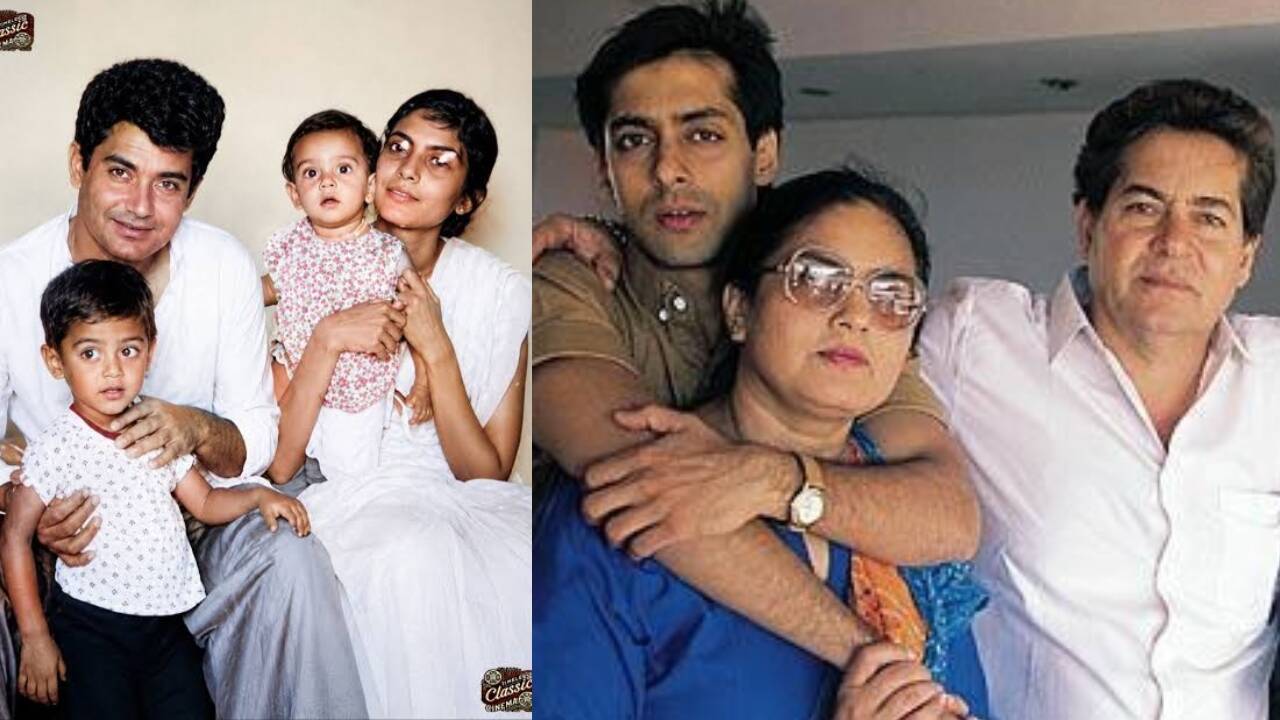
Bollywood superstar Salman Khan recently opened up about the personal challenges his parents faced when they first married, revealing a period of estrangement within his extended family. Speaking in a candid interview, the actor discussed the interfaith union of his father, veteran screenwriter Salim Khan, and his mother, Sushila Charak, who later took the name Salma Khan.
According to the actor, his maternal grandfather initially strongly opposed the marriage. However, Salman clarified that the resistance was not rooted in religious differences. Instead, the primary concern stemmed from the cultural stigma and uncertainty associated with the film industry at the time.
Because Salim Khan worked as a writer in the Hindi cinema sector, his prospective father-in-law worried about the stability and social standing of such a career. This hesitation led to a significant rift between the household and the newlywed couple. Salman shared that his maternal grandfather refused to speak to Salim Khan for a period of five years following the wedding.
The ice finally broke with the birth of Salman's younger brother, Sohail Khan. The arrival of the new baby served as a bridge for the family, melting away the lingering resentment and paving the way for a full reconciliation. Over time, the extended family bonded closely, putting the initial tension behind them.
Salman Khan remains one of the most prominent figures in Indian cinema, frequently maintaining a close-knit relationship with his large family. His parents have often been cited by their children as the foundational pillars of the household. Salim and Salma Khan raised four children together, including actors Salman, Arbaaz, and Sohail, as well as daughters Alvira and Arpita.
The revelation offers a rare glimpse into the personal history of one of Bollywood's most famous families. It highlights how generational concerns and professional prejudices shaped the early days of a marriage that would eventually become a cornerstone of the entertainment dynasty.
Reporting based on coverage first published by The Times of India. Read the original report at The Times of India.