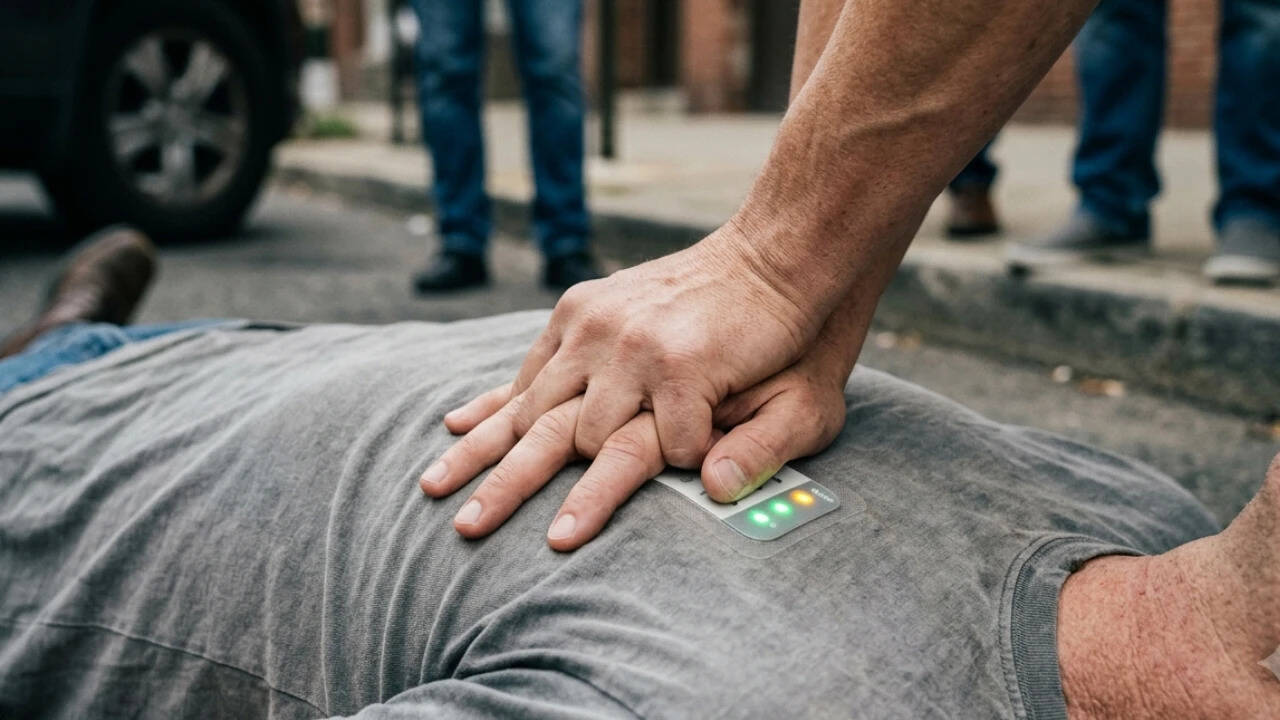
A team of four engineering scholars from the University of Washington has created a portable medical device designed to improve emergency cardiac response. Their invention, known as CPRight, is a compact patch roughly the size of a standard wallet that assists bystanders during cardiopulmonary resuscitation.
Cardiopulmonary resuscitation is a critical emergency procedure used to maintain blood flow and oxygenation when a person experiences cardiac arrest. Traditional training emphasizes the importance of maintaining proper compression depth and rhythm, yet untrained bystanders frequently struggle to apply the correct amount of force or maintain the necessary pace under high-stress conditions.
The newly developed patch addresses these common challenges through a built-in system of light-emitting diodes. As a rescuer performs chest compressions on the device, the visual indicators offer immediate feedback regarding both the speed and depth of each movement. This allows individuals to adjust their technique dynamically without needing bulky external monitors or specialized medical hardware.
The project recently earned significant recognition at the annual Collegiate Inventors Competition. The student team captured the undergraduate first-place honor, which included a ten thousand dollar cash prize.
The nationwide competition highlights novel student-led technologies across various scientific and medical disciplines. Alongside the resuscitation patch, this year's event acknowledged several other academic breakthroughs focusing on advanced cancer therapies, physical rehabilitation tools, and neurological monitoring systems.
University officials and public health advocates frequently emphasize the importance of accessible emergency response tools in community settings. Because cardiac arrest can occur unexpectedly in public or residential areas, lightweight devices that fit easily into a pocket or handbag could potentially increase survival rates by empowering ordinary citizens to deliver effective aid before professional paramedics arrive.
Reporting based on coverage first published by The Times of India. Read the original report at The Times of India.