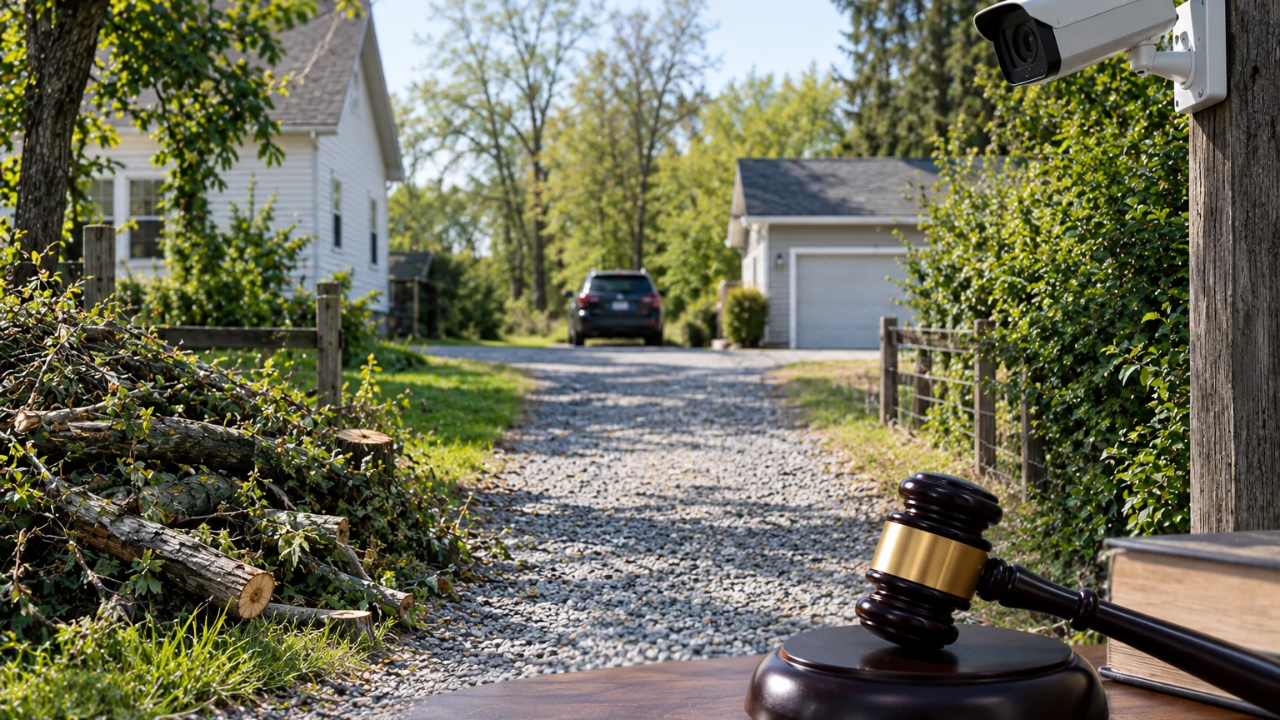
A long-running neighborhood dispute involving a shared driveway and a removed tree has reached a new legal milestone in Minnesota, where an appeals court has struck down a substantial financial penalty initially awarded for an alleged invasion of privacy.
The roots of the legal battle trace back to tensions between two neighboring couples who shared access to a single driveway. The friction escalated after one of the couples, identified as the Stahleys, carried out unauthorized property maintenance work on land belonging to the other couple, the Rubys. This intervention included the removal of a tree situated on the Rubys' property without their knowledge or permission.
The ensuing legal action initially resulted in a favorable outcome for the Rubys, who argued that the unauthorized actions and surveillance measures employed by their neighbors had crossed legal boundaries. A lower court previously ordered the Stahleys to pay a total of $27,000 in damages. The bulk of that financial judgment—specifically $20,000—was designated as compensation for an invasion of privacy, stemming from the placement and use of cameras overlooking the shared space.
However, the Minnesota appeals court determined that the privacy award could not legally stand under the specific circumstances of the case. The appellate panel reviewed the parameters of the privacy claim and concluded that the trial court erred in assessing liability and damages for that particular aspect of the dispute. Consequently, the appeals court reversed the $20,000 portion of the judgment.
The ruling does not completely end the litigation between the two households. The reversal requires the lower court to conduct further proceedings to reevaluate aspects of the case, including the appropriate financial adjustments required for the unpermitted tree removal and property interference.
Property disputes involving shared infrastructure and boundary trees frequently test neighborly relations and local civil laws. When conflicts arise over maintenance responsibilities or the installation of security equipment such as driveway cameras, courts are often asked to balance personal property rights against expectations of privacy in residential areas. This latest judicial review highlights the complex legal hurdles homeowners face when neighborhood disagreements escalate into formal litigation over land use and surveillance.
Reporting based on coverage first published by The Times of India. Read the original report at The Times of India.