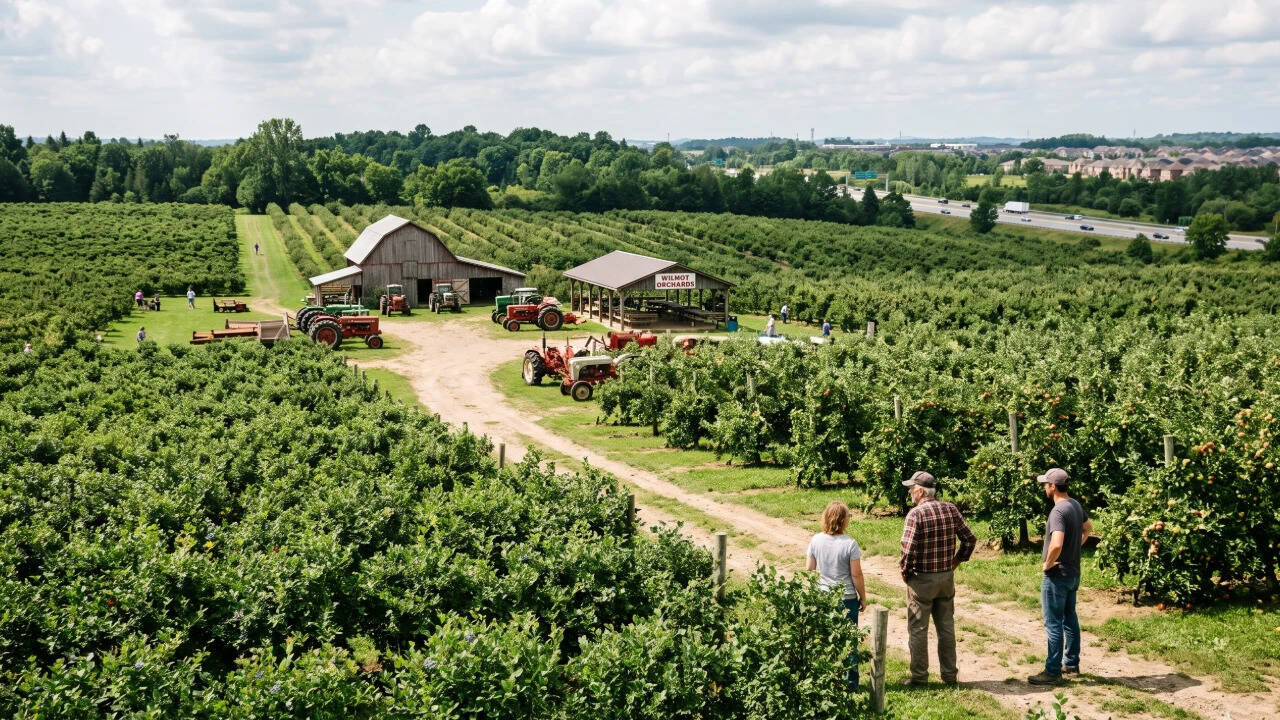
An agricultural family in Ontario has chosen to shield their multi-generational fruit farm from urban expansion by placing a long-term conservation agreement on the property. Charles Stevens and his relatives rejected a substantial multi-million dollar buyout offer from real estate interests, opting instead to secure the land for agricultural productivity. The arrangement restricts future non-agricultural development across a significant portion of the acreage for nearly a millennium.
The property, known as Wilmot Orchards, spans 164 acres and has long produced fruit for local and regional markets. Rather than selling to developers eager to pave over the green space for residential housing subdivisions, the family committed a portion of the land to permanent agricultural stewardship. Specifically, 29 acres of the farm are now protected by a legal easement designed to last for 999 years.
This decision comes amid mounting tension between the rapid expansion of urban centers in southern Ontario and the preservation of the region's fertile Greenbelt and surrounding farmlands. As towns and cities grow outward, agricultural operators frequently face intense financial incentives to sell their acreage for housing and industrial complexes. Many farming families struggle with generational transitions, making high-value offers difficult to turn down despite the long-term loss of productive soil.
By placing the conservation restriction on the property, the owners have ensured that the designated acreage cannot be rezoned for urban use for centuries. The move guarantees that future generations of growers will have access to the arable land, helping to sustain local food security and rural heritage. While the exact financial details of the rejected offer reflect the soaring market value of real estate in the region, the family prioritized environmental and agricultural continuity over immediate monetary gain.
Conservation easements have increasingly become a crucial tool for landowners wishing to protect natural landscapes and working farms from the pressures of sprawl. These legal agreements permanently limit the type and amount of development that can take place on private property while allowing the owners to retain title and continue farming. The action taken by the Stevens family highlights a growing movement among rural landowners who choose legacy and environmental preservation over the rapid pace of suburbanization.
Reporting based on coverage first published by The Times of India. Read the original report at The Times of India.